The rules for keeping your driveway and path in order are not uniform across Australia in 2026; they will differ according to the state or territory, the level of local restriction and who your water provider is. Do not make the mistake of thinking you can put a hose or high-pressure cleaner to work just because the driveway has seen better days after a dust storm.
In most of the country it is best to broom, rake or leaf blow the loose dirt before doing any spot cleaning as part of sustainable outdoor surface cleaning as opposed to a full wash down. While certain authorities will let you have at it with a trigger nozzle or similar equipment, there are those who will not countenance the use of drinking water on concrete, paved driveways or paths unless an accident, fire, chemical spill or some other health and safety hazard (or approved construction) is involved.
Isadora Graham has put together this guide for the reader intent on having a tidy entrance without needlessly running up the mains water bill or earning a reprimand from the local water provider. Be sure to verify what notice is in force for your address prior to commencing any work, as these things can be altered by the weather or supply levels and local declarations.
Check The Rule First
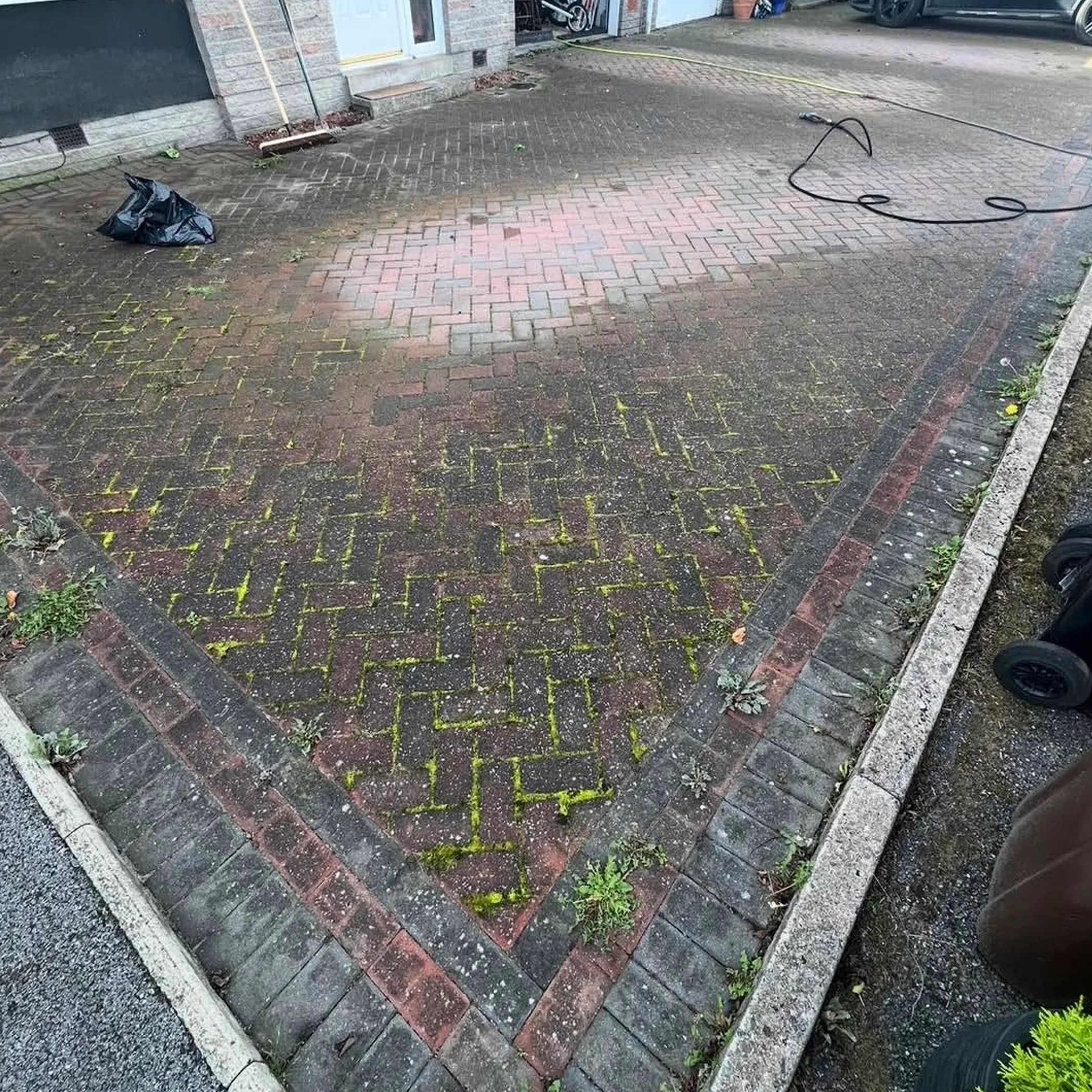
There is no national rule in Australia that applies to every outdoor surface or path. The advantage of looking into it beforehand is that one does not confuse a water-saving guideline with something that is legally enforceable.
It could be a matter of using rainwater tanks or greywater versus drinking water, or it may come down to the dictates of your council, a state department or water provider.
Identify Who Is In Charge
Find out which organisation has jurisdiction over water restrictions at your property by way of your postcode. You could be under the purview of Sydney or Melbourne Water, Hunter Water, Icon Water, the Water Corporation or some other regional outfit.
Your local council is a good source of information on pollution controls and the like but they are not always the ones who set household restrictions. If there is any question, consult both the council and the water provider.
What Constitutes Cleaning
An authority will make a distinction between washing off the odd bit of dust and dealing with a hazard. Rinsing a whole driveway for being grubby is not the same as getting rid of animal waste, oil, paint or slippery algae.
People are caught out by this. One wants a concrete path to be spotless, yet a slick path near the dunny is a problem. Should the task be necessitated by a genuine hazard such as a spill or construction work, put away the contractor’s notes or receipts.
Hosing Hard Surfaces
Can it be done? At times, but do not make it a habit. Hosing is frequently off limits since it puts treated drinking water and its contaminants into the stormwater system. And leaving the hose to run while you take in your handiwork is a sure way to squander water, not to mention the effect on the bill.
There Are Exceptions
You might be given leeway to clean up after a fire, accident or chemical spill. Some areas permit the use of a high-pressure cleaner for targeted spot work.
But do not go by what a neighbour said three summers back, read the fine print. There may be stipulations on the kind of nozzle or how much runoff is to be contained.
The Trouble With Washing It All Down
A full wash of the driveway will see fertiliser, soil, brake dust and oils end up in the gutters. Stormwater makes its way to the waterways unencumbered by the treatment sewage gets, making the runoff an environmental as well as a wasteful concern.
It is hard to argue for washing every inch of paving from the garage to the letterbox when a small amount of water will do for a narrow stain. For cosmetic reasons, stick to dry methods.
Less Water On The Paths
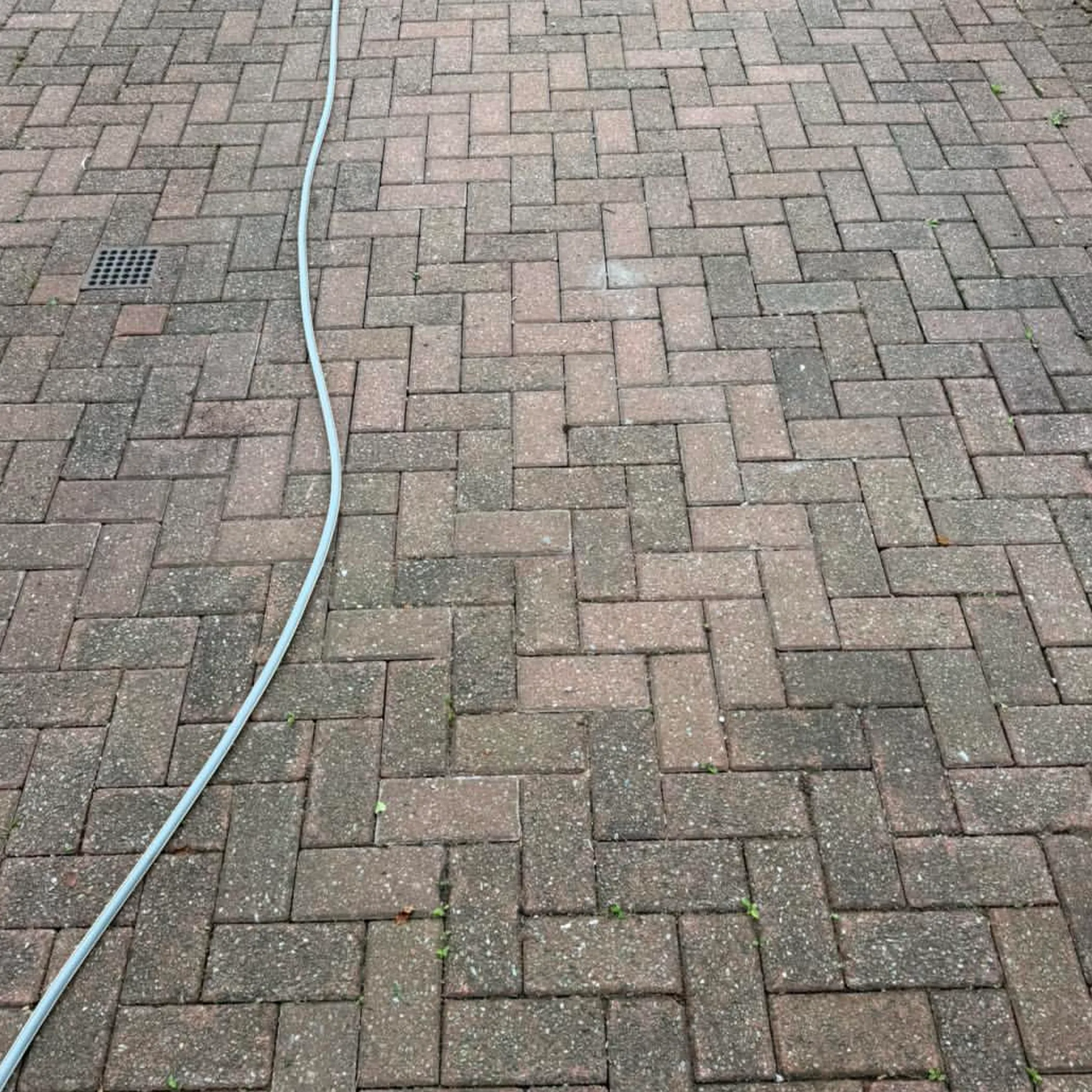
It is not very glamorous but dry tools are the way to go for the sort of dirt that requires removing. Get the sand, cobwebs and leaves with a broom and you will not need to resort to water.
There is merit to a dry approach for cleaning paths: it curbs slippery runoff and one can tell at a glance which marks are in need of attention. In the courtyard here in Fremantle I find a stiff broom will put an end to more mess than anticipated, leaving the leaf blower to deal with the corners where the schnauzer has left his hair as if he were paying rent.
A Dry-First Routine
- Clear the area of furniture, toys, pot plants and cars.
- Make sure there are no trip hazards, loose pavers, animal waste or any oil and chemicals about.
- The concrete and paving should be given a good going over with a stiff broom.
- Leaves, gravel and other garden detritus can be dealt with by rake or blower.
- Do not simply push the waste into a stormwater drain, collect it.
- If there are marks left over, spot-clean them with as little water as is practical.
With painted surfaces, tiles or timber decking, give the material a once-over before you start scrubbing. A hard brush will roughen up timber or take off a coating and what was meant to be a small job can become a weekend of making amends to your deck.
Be Careful With Runoff
Should you be allowed to use water, put in place some temporary controls to block off the stormwater entry and make sure dirty water is channeled to where it belongs. Detergent, degreaser and oily water have no business running into the street.
And do not be casual in mixing household chemicals. Put on gloves and eye protection, see that children and pets are out of the way and heed the product label until the surface is dry and safe.
Water Only Where You Can

Match the method to the problem, it is the most defensible course. Approved equipment for isolated stains, dry cleaning for anything loose, but only in accordance with local rules.
Conserving water is not a matter of mustering up the moral fortitude to clean a driveway without it; some surfaces call for water for hygiene or safety. The idea is to be deliberate, contain the runoff and be done with it when the hazard is gone.
Opt For The Smallest Method
An open hose affords less control than a trigger nozzle, though that does not render every activity legal. In certain cases a high-pressure cleaner will be more sparing with water than a hose left running, but then again the pressure can strip a coating, harm mortar or disperse contaminated water.
Do not think tank water from a rainwater system is beyond the pale of local regulations just because it is not from the mains. Greywater demands the same consideration, as not all products or systems are fit for outdoor hard surfaces.
Put Your Water Use To The Test
To have a record for the house, put down the water-meter reading before and after you are through. The gap between the two is the volume in kilolitres (times 1,000 for litres).
It is a handy way to size up a bucket, hose, trigger nozzle or pressure cleaner and puts to rest the notion of a long rinse being “just a quick clean”.
State And Regional Rules
You will not find a national rule in Australia, they are local. The following table is a useful point of departure but not a replacement for what your state authority or water provider has to say.
| Region Or Authority | What To Check | Practical Approach |
|---|---|---|
| Victoria | Any temporary restrictions and the Permanent Water Saving Rules | Start with dry cleaning, then see if the rules permit approved pressure or safety washing. |
| Greater Sydney | Current restriction notices and the Sydney Water Wise Guidelines | Do not take it for granted you can hose the driveway for looks; look at the source, equipment and reason. |
| Other NSW regions | The local water provider (Hunter Water where applicable) | Adhere to their rule, not something from Sydney. |
| Western Australia | Local restrictions, sprinkler roster and Water Corporation rules | Find out if the rule is aimed at hand-held hoses, high-pressure gear or all outdoor use. |
| Australian Capital Territory | Icon Water’s restrictions and declarations | Before turning on the mains outside, confirm the stage and any exceptions. |
| Queensland, SA, Tasmania and NT | Council, regional and state requirements | During a drought or fire danger in particular, check with the authority for the property. |
On Victoria’s Permanent Rules
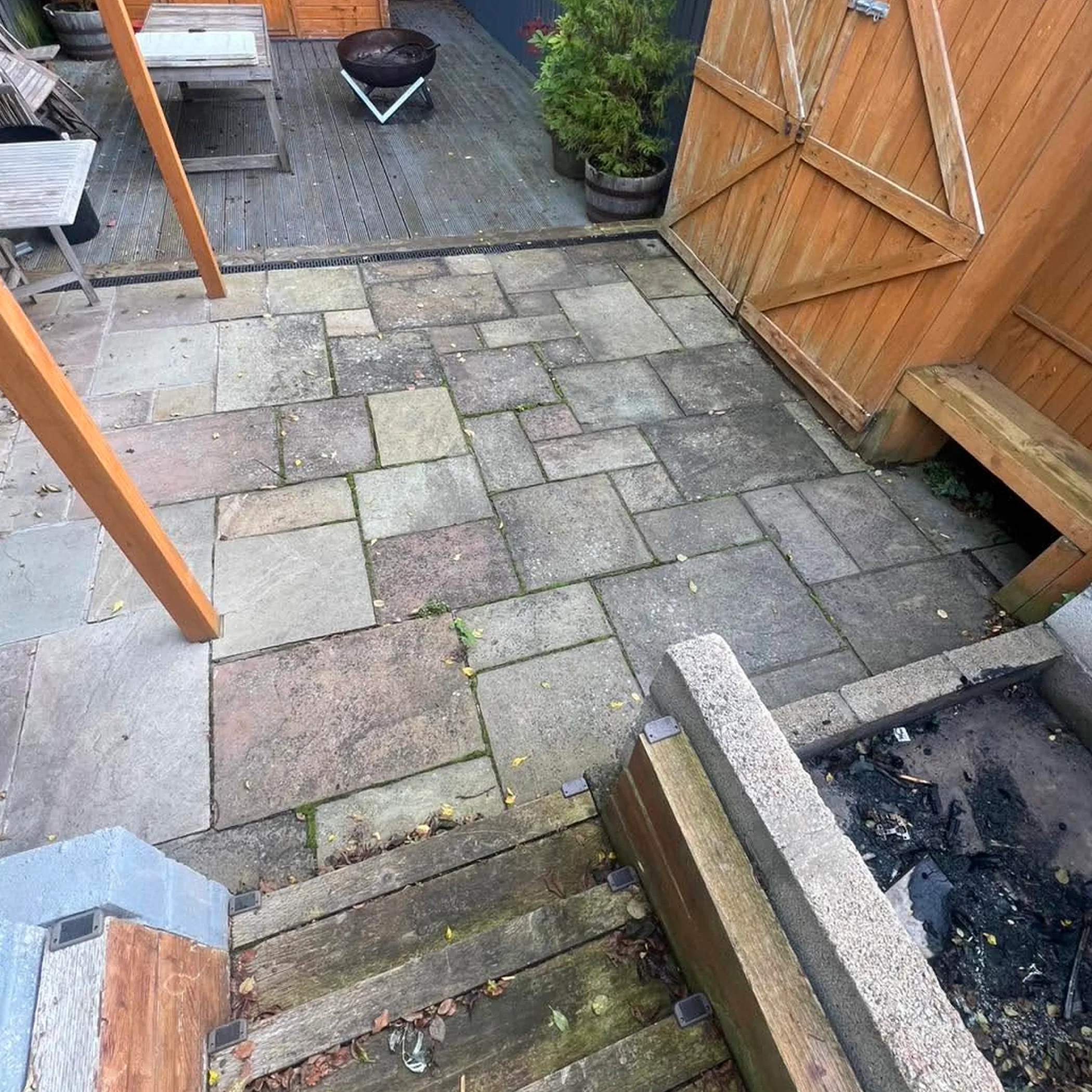
Even in the absence of a temporary measure, the Permanent Water Saving Rules set the standard for responsible use outdoors. They come up in connection with Melbourne 2026 water restrictions and whether one can go about washing a car or hard surface at home.
But “permanent” is not to be taken as a blanket ban on cleaning nor carte blanche for it. The equipment, the surface, the timing and the purpose will dictate what is permissible.
Melbourne Cleaning Questions
When it comes to Melbourne properties, one should consult the Victorian water authority and the local water corporation for up to date information prior to putting mains water to use on concrete or any paved surface. While Melbourne Water is a significant statewide body, it is the retail water corporation that will have any household restrictions to put before you.
Should a path be treacherously slippery or a spill pose an imminent danger, make note of it and see to the cleaning of that part alone. There is no point in standing about for a perfect reading of the rules while someone puts on a display like a penguin and slides over the paving.
Sydney And NSW Guidance
The Water Wise Guidelines from Sydney are there to encourage prudent water use among Greater Sydney residents, but they are not to be applied by rote across New South Wales. One will find that water restrictions in the state can vary depending on whether the provider is in Sydney, a regional system or of a smaller calibre.
For a property in Greater Sydney, look first to what Sydney Water has to say. With a regional address, the local provider is the place to start, be it Hunter Water or otherwise, to see if a restriction stage has been declared.
Hard Surfaces in Greater Sydney
Is the pressure cleaning of a driveway a matter of safety or simply cosmetic? That is the question to answer before proceeding. Employing a high-pressure cleaner over an entire driveway without cause is just a way to waste water and produce polluted runoff.
Confine your efforts and work in controlled bursts, do not let dirt be rinsed into the gutters. Where a contractor is on the job, enquire as to their method of containing runoff and the rule they are following; “we have always done it so” does not constitute compliance.
WA And Local Requirements

Perth is not the Gibb River Road or the Pilbara, and Western Australia’s water management reflects that. Seasonal conditions, local edicts and the Water Corporation’s data are all relevant.
Up in northern WA and the Top End a wet-season storm might take care of some loose dirt, then again cyclone alerts from November through April can leave a trail of debris and hazards. The Red Centre is another matter: the aridity is such that one is inclined to wash the dust off, yet the need to conserve water is all the greater for it.
What the Local Conditions Dictate
There may be different regulations for rainwater tanks, bore or recycled water as against the mains. Having a tank does not absolve a property of its environmental obligations when detergents or other contaminants make it to the drains.
An accident, chemical spill, fire danger or construction can alter the order of business. Put the hazard to rights and if in doubt as to whether specialist disposal or a report is called for, get in touch with the authority.
A Smarter Way To Clean
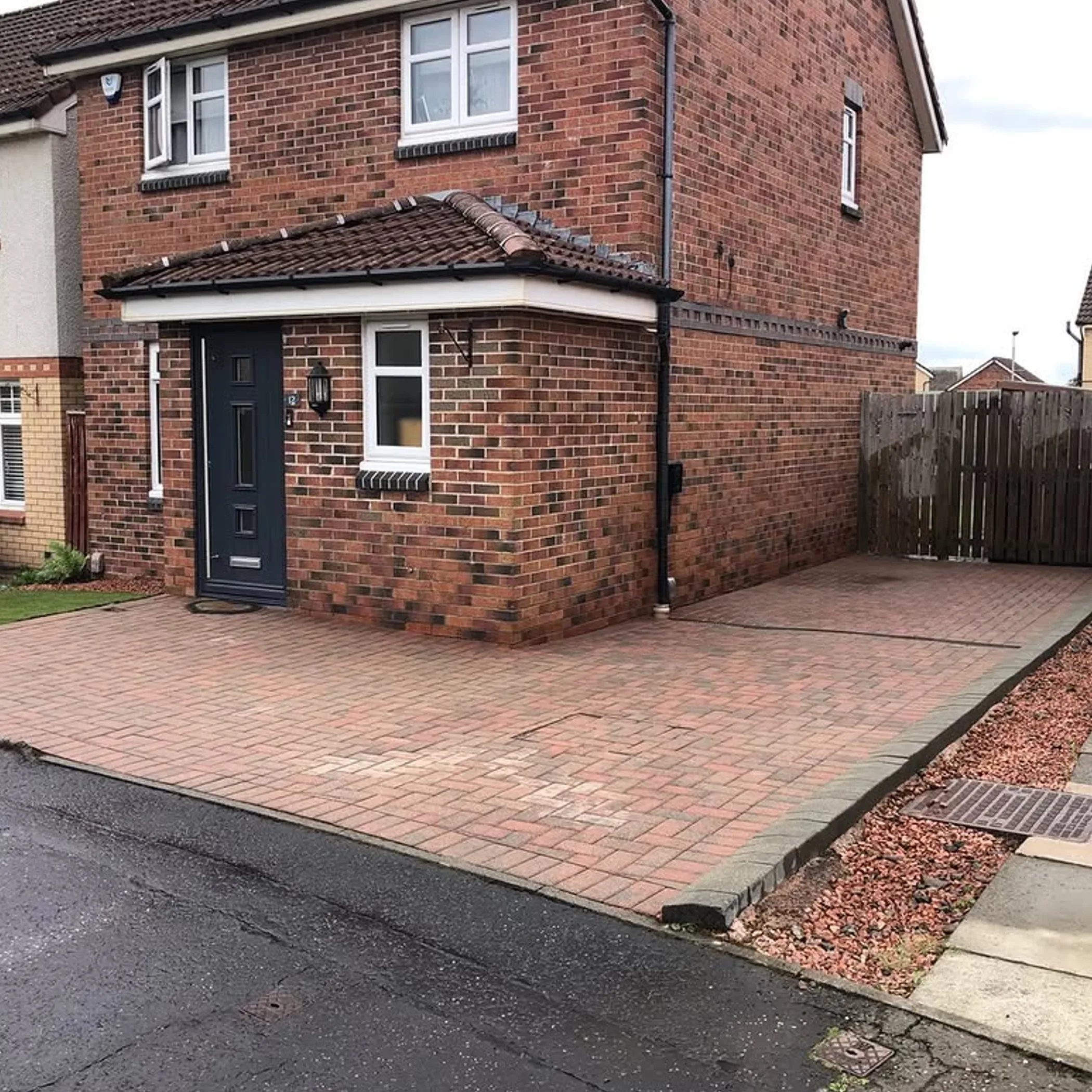
Homeowners, renters and contractors would do well to adopt a routine for outdoor surfaces that is unexciting but effective: inspect and sweep, put down the stain with the minimum of water and ensure the surface is safe. It is a process to be repeated, not some Saturday ordeal.
Improvisation is out of the question where asbestos dust, fuel, sewage or heavy mould is present. Cease and put in a call to the council or a qualified professional for counsel.
Reality check
The expectation is that a quick pass with the pressure washer will have the whole property looking as good as new.
The truth is, pressure cleaning has a way of bringing out uneven fading and damaging old mortar; it can disperse dirty water and in some cases strip away the very surface that was concealing a maintenance issue.
You might think a bucket will invariably be more sparing with water than a hose but then again, if left to chance the bucket method can mean you are refilling it over and over. A trigger nozzle under control is often the better option for a small job that is permitted. Judge by the outcome, not what it looks like.
One-Day Cleaning Plan
Make a day of it and put first priority on entrances, steps and narrow paths or anywhere that loose grit, oil and algae present a health and safety risk. Get an early start and see what the weather is doing, make sure there is time for things to dry and an unobstructed way back from the rear gate to the front door.
Put on some shoes with a firm grip and shield your eyes from any splashback, and do not let hoses get in the way of where one would walk. In the height of summer do not work on surfaces that are scorching. Come winter or when it is wet, give it more time to dry as a path may well be slippery even when it appears clean.
Frequently Asked Questions
What Are The Current Water Restrictions In Australia?
Do not expect a uniform restriction across Australia for the washing of driveways and paths. It is a matter of the state, territory, local council and water provider, among other things such as the source of the water and the stage of restriction. Before you put mains water to use, enquire with the authority for your property.
Can I Wash My Car In My Driveway In Victoria?
In Victoria the rules are contingent on the conditions, equipment and water source at hand. You will find an unrestricted running hose is viewed differently to a bucket or an approved commercial facility. See what the local water corporation has to say and review the Permanent Water Saving Rules.
Are Water Restrictions Expected In Victoria In 2026?
Any declaration or restriction is subject to change given the rainfall, demand and storage levels. An old notice or a prediction is not something to go by. For the latest word from the Victorian authorities and your water corporation, check before you set about washing a vehicle or path.
What Are The Sydney Water Wise Guidelines?
They set out the sort of practical water-saving one should observe in Greater Sydney. When it comes to the driveway and paths, employ dry methods and eschew superfluous washing with mains water. Sydney Water will have a position on what is permitted for safety and equipment.
Can A High-Pressure Cleaner Be Used During Restrictions?
Not of its own accord. While some rules allow for certain equipment or a degree of cleaning, others put limits on the purpose or source. A high-pressure cleaner is prone to wasting water and making a polluted runoff so be sure of the local rule and put it to a necessary and permitted task only.
Clean Well And Check Locally
There is a simple way to go about it in 2026: sweep, spot-clean, contain the runoff and have the local rule in order before the hose is turned on. To get your bearings on water saving and use in Victoria, the Victorian Government has the official information; after that, look to the provider at your address.
But the rules are only part of it. Proper cleaning is protection for the concrete, paving, timber, tiles and the waterways as well as for pets and whoever is to cross the path later. A surface that is clean is fine, but one that is safe and in compliance is preferable.
