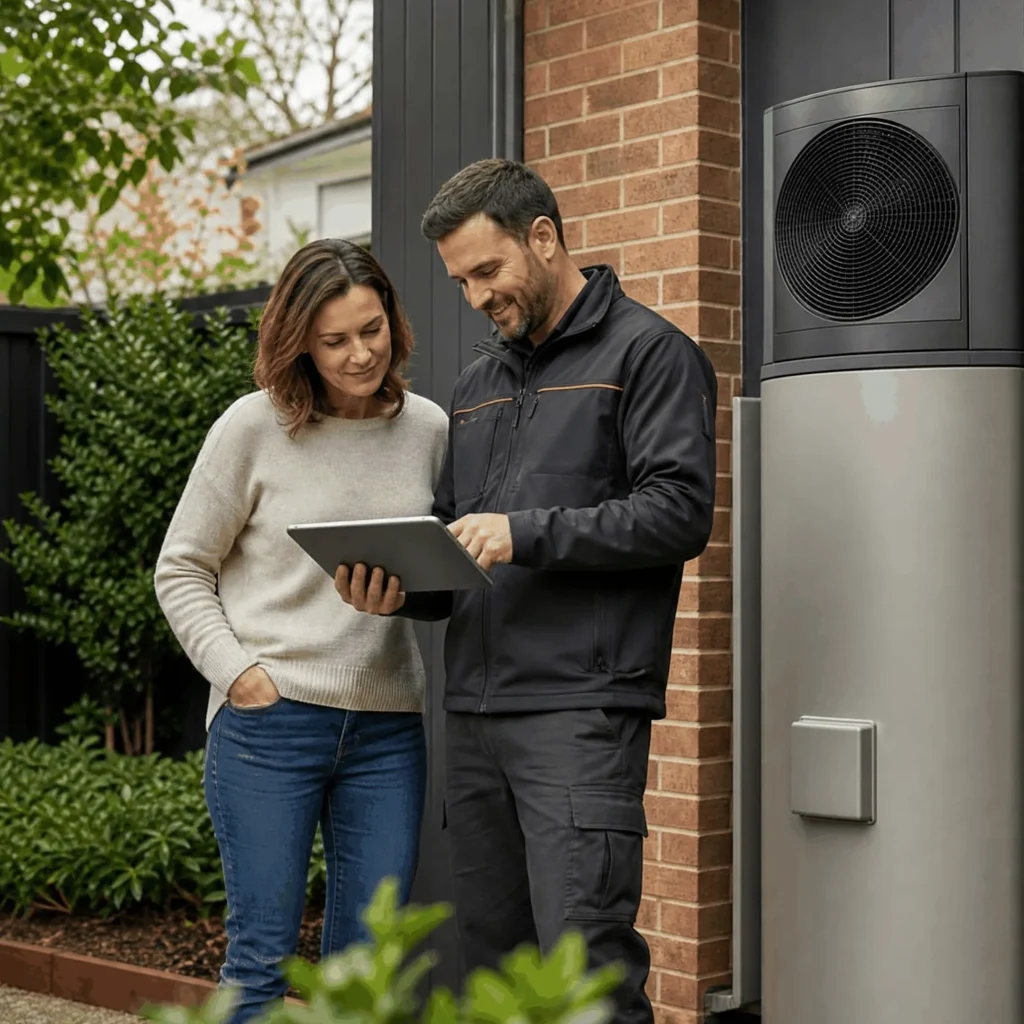
There are two numbers to put in mind when it comes to hot water safety in Australia: 60°C for what is stored and 50°C as the limit for most of the taps in your household. In this way one can have a measure of protection against painful scalds and at the same time lower the threat posed by Legionella bacteria.
But the temperature setting on the system is not the whole story. You will also want to consider tempering valves, be mindful in the bathroom, make regular checks, follow essential maintenance practices and give some thought to the more vulnerable in the house, be they children or of advanced years. I am Isadora Graham and my approach to safety is to offer advice that has merit in an actual home rather than something you might find on a neat diagram that is put aside once the installation is done.
Hot Water Settings That Matter
In an Australian home there are two temperatures to be managed, namely the hot water tap temperature at the outlet and the storage temperature within the cylinder. Mix those up and you have made a hygiene issue or a scalding hazard of it with very little effort.
Depending on the property and the rules of the state or territory the requirements may differ. A licensed plumber should be called in to alter a fixed hot water system, any time a tempering valve or similar control is in question.
| Part Of The System | Common Target | Why It Matters |
|---|---|---|
| Stored water | 60°C | To have some control over Legionella in the system. |
| Household outlets | 50°C maximum | Less chance of a bad scald from the shower or bathroom tap. |
| Sensitive facilities | 45°C | Where the rules call for it, as in childcare or aged-care. |
| Bath or shower | Check first | The room and the flow rate can affect the temperature as much as individual sensitivity. |
Do not take these as an invitation to run every tap up to the max. 50°C is the norm for domestic outlets but not what every shower has to be; for a baby or an older person with less sensation a lower temperature is more comfortable.
The Case For Sixty Degrees
Stagnant warm water is an ideal medium for Legionella, which is why the storage temperature is important. At 60°C the risk is better managed and yet you can have a cooler temperature coming out of the household outlets. One could see it as the necessary compromise between skin protection and hygiene. Do not be tempted to just turn down the cylinder thermostat without looking at the system as a whole, it can cause its own problems.
Storage Is Not Tap Temperature
A tank at 60°C is no reason for the water to come out of the bathroom tap at the same. For someone who does not feel heat as he should or is slow to get away, that is a recipe for a serious scald.
Regulations across Australia are dictated by health, plumbing and building standards. The authorities in each state may put it in their own words so the local context of an installation has to be considered.
For public guidance one can look to the energy and water services at SA.GOV.AU. Those in Victoria would do well to check with the Building and Plumbing Commission or have a licensed plumber put your mind at ease as to what is required.
Tempering Valves
What a hot water tempering valve does is to blend the cold and heated water en route to certain outlets. Provided it is in good order it will keep the tap in a safer range.
Yet it is not infallible. A change in pressure can make it behave in an unexpected way, or it can go out of adjustment or block. If a bathroom tap is running hotter than it ought to, do not just put a cold cloth to it and move on.
Priority In The Bathroom
In the shower or at the tap you have wet skin and perhaps not much clothing to speak of, let alone quick reflexes. An accident with hot water can be made worse if one were to slip.
Some may put a different value on the kitchen tap where the cleaning demands hotter water, but that is not to say it is harmless. A child can reach further than one thinks and a sink full of hot water will do severe burns in short order. Tempering valves are not to be tampered with, bypassed or put a cover on by anyone without the requisite authorisation and knowledge of the system. Leave it to a licensed plumber to put the outlet temperature to the test and make sure the valve and system are in order.
Safer Temperatures for Bath and Shower
What is a safe shower temperature will vary from one individual to the next; there is no ideal setting that suits all. One has to take into account age, skin sensitivity, mobility, any illness or medication being taken, how warm the room is and if a person can put in a quick reaction.
Be circumspect with children and those who are vulnerable: let the cold water run before you introduce hot water in measured amounts and see how the mix is before they get in. A thermometer is more dependable for someone with a high degree of sensitivity, though an elbow or wrist will do for a quick check.
Protecting The Young And Old
A child’s skin is thinner and he or she may not appreciate that hot water continues to burn. Do not put faith in a child to tell you if the bath is too hot and never have a young one near running water unattended.
With older people, sensation and mobility can be diminished and their response to heat slower; some medicines and conditions will impact on their awareness of temperature. Make certain the bathroom floor is not a slip hazard, check the water and have them close at hand.
Then there is the 45°C figure for sensitive facilities. While it applies in some higher risk settings, do not simply apply it in your home without thought. Put it to a licensed plumber as to what is right for your household fixtures.
Burns Can Be Prevented In Your Day To Day
Preventing scalds from hot water is for the most part a matter of consistent, unremarkable behaviour. You want to avoid the unexpected: a tap that gives you a sudden blast, a child with his hands on a handle, or a bath left to its own devices while you attend the door.
In dealing with clients I have found that the dramatic nature of the risk is what catches the eye and the small habits that give rise to it are overlooked. An unmarked mixer or a hot drink within a toddler’s reach is as much of an issue as the heater itself, as is a loose handle on the tap.
- Before using the bath or shower, particularly if the system has been idle, test the water.
- Start with cold and build up the hot.
- Keep children from the handles and never leave them unattended in the bathroom.
- Turn the handles of kettles and saucepans in from the bench edge.
- Ensure the child is not under the running water when you are making adjustments to the tap.
- Verify that hoses, tapware and shower mixers are in good working order.
- Have your household members report any water that seems unstable or out of the ordinary.
Where People Are Misled
It is a common assumption that a dial set low equates to low risk. In fact the dial can be poorly labelled or inaccurate and have no bearing on what comes out of the outlet. Some think a tempering valve is a fit and forget item once installed. Or they will put a thermometer in the bath once and consider the matter settled. But the temperature is subject to change through system faults, seasonal variations, incoming pressure or another shower running at the same time. Safety is about making checks, not a once only exercise.
An Inspection Of Your System
There are warning signs to be had without having to open up the heater or tinker with the controls inside. See if the relief pipe is discharging unduly, if taps have a tendency to splutter or the shower gets hotter of a sudden when you put on another tap, and if the water temperature holds.
Interference with electrical components or gas controls is not advised, nor should one remove covers. Given the heat, pressure and electricity involved in these systems, a minor alteration can be quite hazardous.
Making A Call To The Plumber
If the tempering valve is in poor shape, the system is leaking, you are getting scalding water or sharp changes in temperature, or the pilot and electrical controls are acting up and the safety device is being tripped, then call in a licensed plumber. Have him measure the delivery temperature at the outlets and verify the storage temperature and which of your fixtures are protected. Tenants should make a written record and inform the landlord or property manager without delay.
With a new or re-done bathroom, wait until the fixtures are in place to have the temperature checked. There is no point in testing a temporary arrangement, it is like inspecting the tyres on a car still in the driveway and gives you a false sense of security.
Winter Hot Water Safety
In winter it is a question of comfort. The bathroom is cold so one runs a hotter bath or has a longer shower and cranks the system up. This does not make the water any safer, it only means greater exposure to the heat.
There is a difference in how a shower will feel in the colder climes of Australia thanks to cooler mains water, and this is true even with no adjustments made to the system. One might find the same tap setting gives a different experience from one time of year to the next in Hobart, Perth or Melbourne, as well as in the inland.
Homes and Seasonal Checks
An inspection before winter is in order to see that the bathroom is well ventilated and the shower mixer is working as it should. A poor flow calls for the showerhead to be put in order, yet do not put it down to a blocked fitting alone; there could be an issue with the valve or pressure.
The north has its own demands. In the wet season the humidity will leave a bathroom damp and slow to dry. Then comes the dry season and the arid air may have people in for longer, hotter showers. But regardless of climate, the question of a safe setting is one for the system to answer, not a matter of seasonal conjecture.
Should the property be unoccupied for any length of time, put it to a professional on the best way to put the system back in service. And do not have a traveller come in off a long haul on the Stuart Highway or Gibb River Road, or after a flight, and step into a shower with an unknown heater without first seeing to the temperature. Those who are tired are not good judges of plumbing.
Maintaining Safe Systems
To keep hot water safe, the controls need regular looking over. Have a read of what the manufacturer says and book in for servicing at the proper times, all the more so with gas systems, an old cylinder or where there are children and other vulnerable folk in the home.
A competent professional will spot any corrosion or scale, check outlet temperatures and the like, and tell you if a tempering valve has stopped regulating. The list of things to check is straightforward: valves, pipework, connections and the controls.
A Household Checklist
Make these checks part of everyday life and put them where they can be seen instead of some folder in a drawer. A word on the household calendar is enough to stave off the yearly “Was it always this hot?” discussion.
- Prior to letting the children in, run the hot water at the bathroom tap and the shower.
- See if there is any sign of a leak or rust about the heater, or if it is making odd noises.
- Make sure the safety controls and tempering valve are to hand.
- Note down the date of service and whatever the plumber has put in for your attention.
- Any alterations to the household or the plumbing warrant a recheck of the system.
This guide is for the homeowner, the landlord, the parent, carer or renter with a hot water system to manage. It is not meant to stand in for a professional’s opinion in a healthcare, childcare or aged-care facility.
Safe Water: Some Common Questions
Temperature is a relative term in common parlance; “hot” and “too hot” are open to interpretation. Best to measure the outlet and system than make a guess.
What is the right setting for a hot water heater in Australia?
As a rule 60°C is kept for stored water to deal with Legionella bacteria, while the household outlet is restricted to 50°C by means of a control. But a licensed plumber is the one to ask for the correct configuration as state and property type will dictate requirements.
Is 22 degrees considered hot?
Not at all. At 22°C the water is room temperature, perhaps neutral or cool on the skin given the air, but it is not what you would call hot for a bath or for cleaning.
45 degrees alright for hot water?
For some it is a comfortable maximum in the shower and a number of sensitive facilities will set it as such, but it is not something to apply across the board in an Australian home. Regulations and who is using the outlet will determine the right temperature.
How about 40 degrees Celsius?
Many will find it warm to hot and fine for bathing. Yet comfort is not synonymous with safety, not for a baby or an elderly person with less heat sensation. Rely on the system’s safety controls and test the water.
Any inclination to adjust the heater?
Leave the internal gas, electrical and pressure controls well alone. You can put the water to the test at an outlet but let a licensed plumber handle the tempering valve and the system’s safety components.
Keeping the System in Good Order
In Australia the safest arrangement is 60°C in storage, a tempering valve in proper working order and some sense around the kitchen and bathroom taps, with delivery at the outlets suitably controlled. The figures matter as much as the users.
When the water is not as it should be, or after some renovation work, or when winter is upon you, have a look. If it does not seem right, do not make a mystery of it and get a licensed plumber out. It takes a few minutes and spares you a burn; there is no need to be taught that sort of thing.
